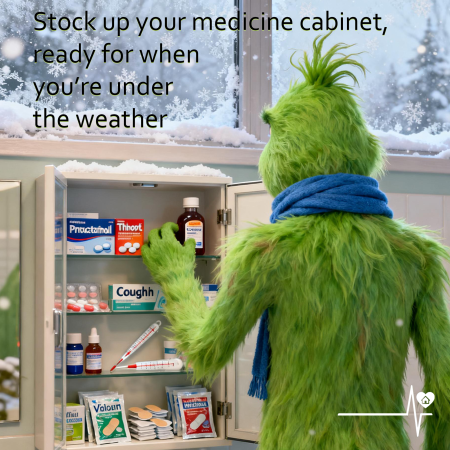


This time of year, many people are stocking up their medicine cabinets to be prepared for seasonal coughs, sore throats, and common winter ailments. Keeping the right essentials on hand can help you manage short-term illnesses safely at home and avoid unnecessary trips to the pharmacy or GP — especially when services are busy over winter.
Good to have on hand:
Paracetamol and ibuprofen – to help relieve pain, fever, and minor aches.
Calpol (for children) – for pain relief and fever in young children.
Plasters, bandages, and antiseptic cream – for cuts, scrapes, or minor wounds.
Thermometer – to check for fever.
Decongestant or cough remedies – to ease cold and flu symptoms.
Antihistamines – for allergies, insect bites, and mild skin reactions.
Rehydration salts and indigestion treatments – for tummy upsets.
Always check expiry dates and store medicines in a cool, dry place out of the reach of children.
Your local pharmacy team can provide advice on how best to use these medicines and recommend homely remedies for common winter symptoms. Many pharmacies also offer the Pharmacy First service, giving access to prescription medicines for certain conditions without needing a GP appointment.
Conditions supported through Pharmacy First include:
Sore throat (aged 5+)
Earache (aged 1–17)
Urinary tract infections (women aged 16–64)
Impetigo (aged 1+)
Infected insect bites (aged 1+)
Sinusitis (aged 12+)
Shingles (aged 18+)
Even if your condition falls outside these age ranges, pharmacists can provide guidance on over-the-counter medicines or advise when to see a GP.
Whether it’s stocking up your medicine cabinet, managing seasonal colds, or dealing with common infections, your pharmacy team is here to give trusted guidance and treatment so you and your family can stay healthy this winter.