

Community pharmacies play an increasingly important role in supporting people’s health - and through NHS Pharmacy First, many can now offer quicker access to care for a range of common conditions.

Pharmacy First is an NHS service that allows trained community pharmacists to assess, advise, and where appropriate supply treatment (including some prescription-only medicines) for certain everyday health concerns — without the need for a GP appointment. For many people, this means faster support, closer to home, and less waiting.

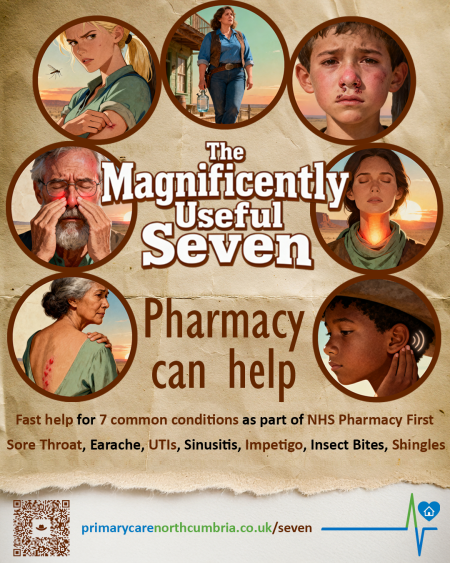
The service focuses on seven common conditions (Sore Throat, Earache, UTIs, Sinusitis, Impetigo, Infected Insect Bites, Shingles) that pharmacies can often manage safely and effectively. It helps make better use of the skills of pharmacists and pharmacy teams, while also easing pressure on GP practices and urgent care services.
Pharmacy First Square.pngIt’s important to note that not all pharmacies currently offer NHS Pharmacy First, and availability may vary by location. Your pharmacist will let you know if they can help or if another service would be more appropriate.

For the 7 common conditions, pharmacists will follow a robust clinical pathway which includes self care and safety-netting advice and, only if appropriate, supplying a restricted set of prescription only medicines without the need to visit a GP.

These clinical pathways have been developed with input from various experts including practising GPs, pharmacists, and antimicrobial resistance specialists as well as representatives from national organisations such as the National Institute for Health and Care Excellence (NICE) and UK Health Security Agency. This ensures that the steps we take together match the care patients would receive in general practice and follow the latest national guidelines.

After a consultation with the pharmacist, the pharmacy will send a notification to the patient’s GP on the same day or on the following working day.

Below, you’ll find more information about the seven conditions covered by NHS Pharmacy First and how your local pharmacy may be able to help.
Sore Throat

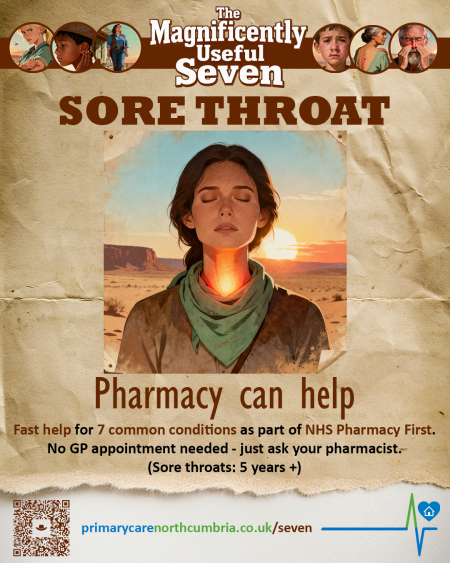
A sore throat is very common and often caused by viral infections, which usually get better on their own within a week. Through NHS Pharmacy First, participating pharmacies can assess sore throat symptoms, offer advice on managing pain and discomfort, and in some cases provide treatment if it’s appropriate. Available age 5 years plus.

Visiting your local pharmacy can be a good first step if your sore throat is mild to moderate, you don’t feel seriously unwell, and symptoms have been present for a short time. Pharmacists can also help identify when symptoms may need further assessment and advise if you should contact your GP or another service.

If your sore throat is severe, lasts longer than a week, is accompanied by a high fever, difficulty swallowing or breathing, or you feel very unwell, it’s important to seek further medical advice.

Includes: Mild viral or bacterial sore throats in otherwise healthy adults and children.

Does not include: Severe infections, difficulty breathing/swallowing, persistent fever, or symptoms in children under 5 years.

Earache

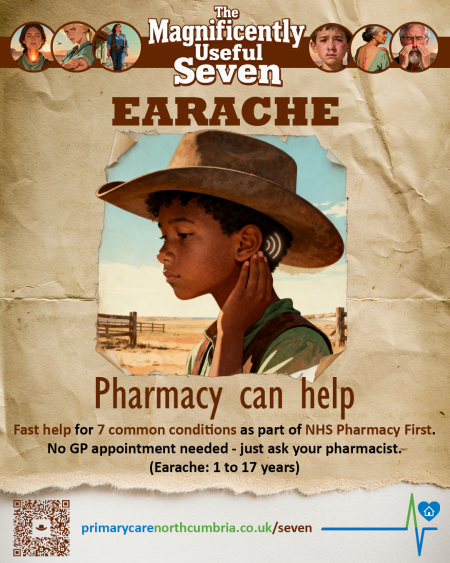
Earache is common, particularly in children and young people, and is often linked to minor infections or inflammation that can settle with time and simple treatment. Through NHS Pharmacy First, participating pharmacies can assess earache in children and young people aged 1 to 17, offer advice on pain relief, and where appropriate provide treatment.

Your local pharmacy is a good place to go if the earache is mild to moderate, symptoms are recent, and there are no signs of serious illness. Pharmacists can also help you understand how to manage symptoms at home and advise if further medical assessment is needed.

If earache is severe, lasts more than a few days, is accompanied by a high temperature, discharge from the ear, hearing loss, or if your child seems very unwell, you should seek further medical advice from your GP or another healthcare service.


Includes: Ear infections in children and young people aged 1–17, mild to moderate pain, recent onset.

Does not include: Severe pain, discharge from ear, fever, hearing loss, adults outside the age range, or very unwell children.

Urinary Tract Infections (UTIs)

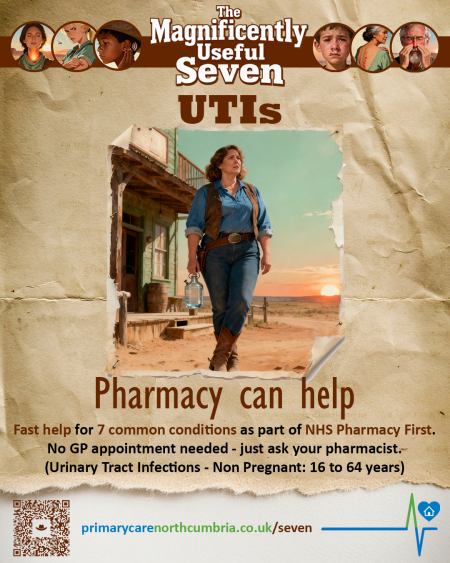
UTIs are common and can cause symptoms such as pain or burning when passing urine, needing to urinate more often, or lower abdominal discomfort. Through NHS Pharmacy First, participating pharmacies can assess and treat uncomplicated UTIs in women aged 16 to 64, helping provide quicker access to care without a GP appointment.

Your local pharmacy is a good place to go if symptoms are mild to moderate and you are otherwise well. Pharmacists can assess your symptoms, offer advice, and where appropriate provide treatment.

If symptoms are severe, do not improve, or include fever, back pain, blood in urine, or if you are pregnant or male, you should seek further medical advice.

Includes: Uncomplicated UTIs in women aged 16–64, mild to moderate symptoms (burning, frequency, discomfort).

Does not include: Men, pregnant women, children under 16, fever, back pain, blood in urine, or severe/unusual symptoms.

Sinusitis (Sinus Pain)

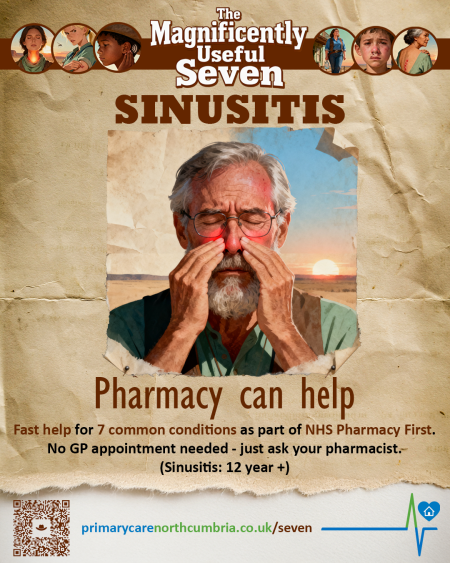
Sinus pain and pressure are often caused by inflammation following a cold or upper respiratory infection. Symptoms can include facial pain, congestion, headache, and a blocked or runny nose. Through NHS Pharmacy First, participating pharmacies can assess sinus symptoms and offer advice and treatment to help relieve discomfort. Available age 12 years plus.

A visit to your local pharmacy is a good option if symptoms are mild to moderate and have been present for a short time. Pharmacists can recommend ways to manage symptoms and will advise if further assessment by a GP or another service is needed.

If symptoms are severe, last longer than 10 days, or are accompanied by a high temperature, swelling around the eyes, or worsening pain, you should seek further medical advice.

Includes: Mild to moderate sinus pain or congestion following a cold, short-term symptoms.

Does not include: Severe or prolonged symptoms, swelling around eyes, high fever, or pain worsening after 10 days. Children under 12 years old.

Impetigo

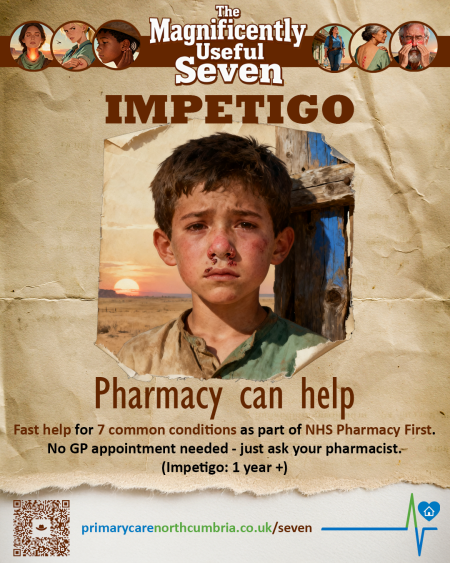
Impetigo is a common and highly contagious skin infection, most often affecting children. It usually starts as red sores or blisters that burst and form a yellowish crust, commonly around the nose and mouth. Through NHS Pharmacy First, participating pharmacies can assess impetigo and, where appropriate, provide treatment and advice. Available age 1 year plus.

A pharmacy visit is suitable if the infection is mild and localised. Pharmacists can advise on treatment, hygiene measures to prevent spread, and whether further medical assessment is needed.

If the infection is widespread, painful, worsening, or not improving, or if your child feels unwell, you should seek further medical advice.

Includes: Localised impetigo in children and adults, mild to moderate severity, small sores or crusts.

Does not include: Widespread infection, severe pain, high fever, systemic illness, or non-bacterial skin conditions. Children under 1 years old.

Infected Insect Bites

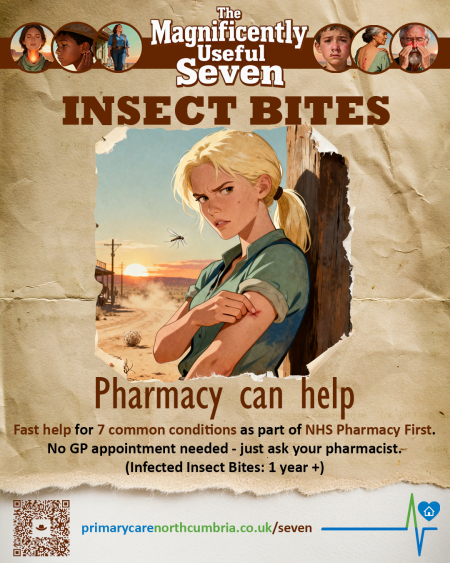
Insect bites are common and can sometimes become infected. Through NHS Pharmacy First, participating pharmacies can assess mildly infected bites from common UK insects — such as mosquitoes, midges, fleas, ticks, or flies — and provide advice or treatment if appropriate. Available age 1 year plus.

Your local pharmacy is a good first step if the bite is mildly infected and symptoms are recent. Pharmacists can offer symptom relief, hygiene advice, and guidance on when further medical assessment is needed.

If the infection spreads quickly, is very painful, or is accompanied by fever or feeling unwell, you should seek further medical advice.

Includes: Mildly infected bites from common UK insects, such as mosquitoes, midges, fleas, ticks, flies, minor spider bites.

Does not include: Exotic/tropical bites, animal bites, severe allergic reactions, snake bites. 
And children under 1 years old.

Shingles

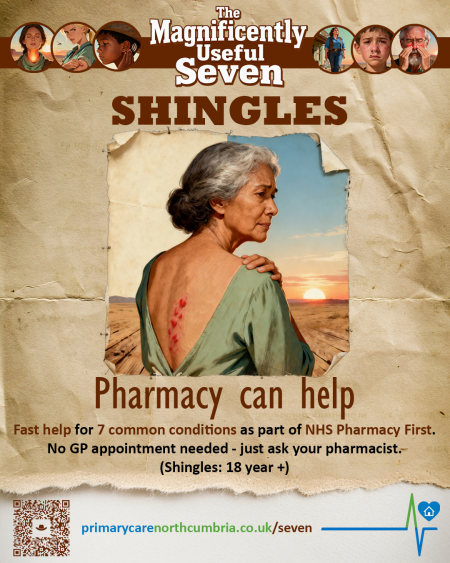
Shingles is a viral infection that causes a painful rash, usually appearing as a stripe or cluster of blisters on one side of the body. Early symptoms can include tingling, burning, or pain before the rash appears. Through NHS Pharmacy First, participating pharmacies can assess suspected shingles and help you access treatment quickly if appropriate. Available age 18 years plus.

Visiting your local pharmacy is a good first step if you notice early symptoms or a new rash. Prompt treatment can help reduce the severity and duration of symptoms.

If the rash affects your face or eyes, you feel very unwell, or symptoms are severe, you should seek urgent medical advice.

Includes: Typical shingles rash in adults, usually a one-sided stripe or cluster of vesicles, mild to moderate pain, early symptoms (tingling, burning).

Does not include: Severe pain, rash affecting face/eyes, widespread rash, very unwell patients, or anyone needing urgent medical attention. Anyone under 18 years old.