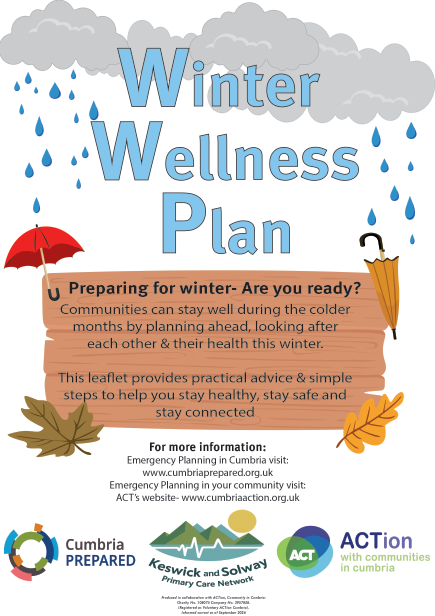
The wonderful people within the Keswick and Solway Primary Care Network alongside ACTion with Communities in Cumbria and Cumbria Prepared have pulled together and updated a popular Winter Wellness Plan Leaflet for patients.
The Pharmacy First service allows you to get advice and treatment for common health conditions directly from your local community pharmacy, without needing to see your GP first. Your pharmacist is a highly trained healthcare professional who can offer expert advice and, for certain conditions, can now provide prescription medicines where appropriate — helping you get the care you need more quickly and conveniently.
Ask at your local community pharmacy or visit NHS Pharmacy First for full details of the scheme and participating pharmacies.
Under Pharmacy First, pharmacists can assess and treat several common conditions, including:
Sore throat (aged 5+)
Earache (aged 1–17)
Urinary tract infections (women aged 16–64)
Impetigo (aged 1+)
Infected insect bites (aged 1+)
Sinusitis (aged 12+)
Shingles (aged 18+)
They can also provide advice and over-the-counter treatments for many other everyday health concerns — from coughs, colds and allergies, to stomach upsets and minor skin conditions.
Visit or contact your pharmacy — You can walk in or call ahead to check availability.
Private consultation — The pharmacist will speak to you in a consultation room to discuss your symptoms and medical history.
Treatment and advice — They’ll recommend the best course of action. If it’s a condition covered by Pharmacy First, they can supply prescription-only medicine where needed.
Referral if needed — If your symptoms need a GP or another service, the pharmacist can refer you directly.
No appointment needed — most pharmacies are open evenings and weekends.
Faster access — get treatment on the same day for many conditions.
Free NHS service — if you don’t pay for prescriptions, there’s no charge for any medicine supplied under Pharmacy First.
Keeps GP appointments free for those who need them most.
Your Medicine Cabinet
Be Winter Ready: Keep a Well-Stocked Medicine Cabinet
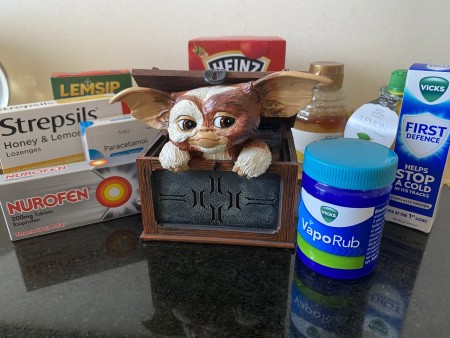
During the colder months, it’s common for minor illnesses like coughs, colds, sore throats, and upset stomachs to appear more often. Having a well-stocked medicine cabinet at home means you can treat many of these common conditions yourself — without needing to see a doctor or pharmacist straight away.
Paracetamol and ibuprofen – to help relieve pain, fever, and minor aches.
Plasters, bandages, and antiseptic cream – for cuts, scrapes, or minor wounds.
Thermometer – to check for fever.
Decongestant or cough remedies – to ease cold and flu symptoms.
Antihistamines – for allergies, insect bites, and mild skin reactions.
Rehydration salts and indigestion treatments – for tummy upsets.
Keeping these basics on hand can help you manage short-term illnesses safely at home and avoid unnecessary trips to the pharmacy or GP, especially when services are busy over winter.
Remember to:
Check expiry dates regularly and replace out-of-date medicines.
Store medicines safely, out of reach of children.
Ask your pharmacist for advice if you’re unsure which medicines to keep or how to use them.
Being prepared with the right medicines and supplies helps you stay well and recover faster, and supports the NHS by keeping urgent services available for those who need them most.
Warm Spots
Warm Spots are safe and friendly public places where people of all ages can go to comfortably spend time with others and meeting new people in their community. In addition, they often have opportunities to connect with relevant support services in the local area.
Follow the links below to find out where your nearest locations are.
They are split by the two council areas of Cumbria.
We will include some of the towns - in case you are not sure which Council you are now under.
Cumberland Council - Local Libraries
Cumberland area includes: Carlisle, Workington, Whitehaven, Keswick, Maryport, Millom, Wigton, Aspatria, Cleator Moor.
Mental Health Support
Winter can be a difficult time for some people, whether you're dealing with stress, anxiety, low mood, loneliness or other challenges affecting your mental health.
There are resources available to help you understand what you're experiencing and explore ways to look after your emotional wellbeing.
Cumbria, Northumberland, Tyne and Wear NHS Foundation Trust (CNTW), which provides specialist mental health services in North Cumbria and runs First Step, runs an annual Winter Wellness campaign, specifically aimed at helping people find mental health support during the winter months. This includes free self-help guides covering topics including anxiety, depression, stress, sleep difficulties and bereavement.
Free Mental Health Self-help Guides
CNTW has free guides covering subjects including anxiety, depression and low mood, bereavement, stress and sleeping problems.
These offer practical advice and self-help techniques.
NHS North Cumbria Talking Therapies
For adults experiencing common mental health difficulties, including anxiety and depression. People can self-refer for support
Text numbers for users of British Sign Language (BSL) The text number is now: 07860 064 775.
Deaf people can also access NHS 111 using SignVideo or by calling 18001 111 using the Relay UK app or a textphone.
(People who are not BSL users who prefer to text can send the word 'CALMER' to 85258 for 24/7 support from mental health charity SHOUT.)
Samaritans
Whatever you're going through, a Samaritan will face it with you. They're available 24 hours a day, 365 days a year. Call 116123 for free. Other ways to get in touch.
Carlisle Eden Mind
Are the local mental health charity in Cumbria. They make mental health an everyday priority. We support minds, offering information, support and local signposting to services. Mindline: 0300 561 0000 (Mon, Thu, Fri, Sat, Sun and Bank Holidays 5pm - 11pm | Tue and Wed 12 noon - 11pm).
Hope Haven
Provides support and wellbeing activities around the Whitehaven and Copeland area for adults (18+). Contact with your comments, questions, or suggestions through the Contact Form, or by calling 01946 556136 (line open Monday-Friday, 9am-5pm) Book an online appointment with ‘virtual safe haven’ to speak to a support worker between 4pm and midnight, seven days a week.
Kooth (online resource for young people aged 11-18)
An online mental wellbeing community with free, safe and anonymous support. Featuring: Magazines, Discussion Boards, Daily Journal and you can chat with the team.
Warm Spots are safe and friendly public places where people of all ages can go to comfortably spend time with others and meeting new people in their community. In addition, they often have opportunities to connect with relevant support services in the local area.
Warm Spots can also be found in local libraries – this link is from Cumberland Council for their local libraries
Warm Spots are safe and friendly public places where people of all ages can go to comfortably spend time with others and meeting new people in their community. In addition, they often have opportunities to connect with relevant support services in the local area.
Warm Spot links from Westmorland and Furness Council (This link includes libraries too)
Warm Spots are safe and friendly public places where people of all ages can go to comfortably spend time with others and meeting new people in their community. In addition, they often have opportunities to connect with relevant support services in the local area.
Information and Advice: Warm Homes Home Energy Checks - This service is free and is available to older people who are finding it difficult to keep their homes warm and are therefore at risk of cold-related illnesses. This could include people who are struggling to pay their bills, who are in fuel debt, who have no heating, or don’t know how to work their heating controls
Green Doctors – Cumbria (Groundwork NE and Cumbria)
They offer free, impartial advice to help you take control of your bills, save energy where possible in the home, and access other services and initiatives available.
They can provide different kinds of support, whether that’s advice on paying off debt with energy or water companies, or spotting other concerns for a referral to other services.