

Date published: 8 October 2026

As the colder months arrive, it's worth giving your medicine cabinet a quick check.

Winter can bring the usual collection of coughs, colds, sore throats and other minor illnesses, as well as the odd cut, scrape or upset stomach. Having a few useful items at home means you may already have what you need when someone starts feeling under the weather.

You don't need to turn your cupboard into a pharmacy, but having a few basics to hand can be useful.

Depending on your household, you may want to make sure you have:

  • Paracetamol and ibuprofen for pain, fever and minor aches and pains.
  • Children's paracetamol, such as Calpol, if you have young children. Always follow the age and dosage instructions on the packaging.
  • A thermometer for checking temperatures.
  • Plasters and basic first-aid supplies for minor cuts and grazes.
  • Antiseptic cream or other suitable wound-care products for minor injuries.
  • Cough and cold remedies to help with some of the symptoms that come with winter illnesses.
  • Decongestants for a blocked nose, where appropriate.
  • Antihistamines for allergies, insect bites and some mild skin reactions.
  • Rehydration treatments for occasions when illness causes you to lose fluids.
  • Indigestion remedies for those times when your stomach isn't playing ball.

Not every medicine is suitable for everyone, so check the instructions before using anything and speak to your pharmacist if you're unsure.
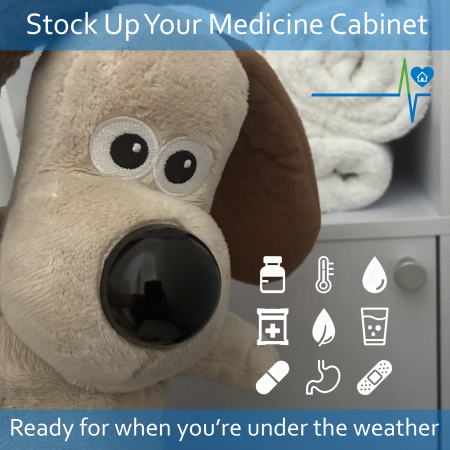
Stock Up Your Medicine Cabinet - Ready for when you're under the weather. A soft toy version of loveable dog Gromit from Aardman Animation's Wallace and Gromit adventures is in front of a medicine cabinet and towels with a few medical icons

Give the cupboard a quick tidy-up too

While you're checking what you have, it's a good opportunity to look at those medicines that have been sitting at the back of the cupboard since goodness knows when.

  • Check expiry dates and make sure medicines are being stored as recommended. They should also be kept safely away from children.
  • If you've got medicines you no longer need, your local pharmacy can advise you about returning them for safe disposal.

Your pharmacist can help too

Your medicine cabinet isn't the only thing worth remembering this winter.

Your local pharmacy team can offer advice about many common illnesses and minor health problems, including which over-the-counter treatments may be suitable and when you might need further medical help.

Many pharmacies also provide the Pharmacy First service, which allows pharmacists to assess and, where appropriate, provide treatment for certain common conditions without you needing to see a GP first.

Pharmacy First covers:

  • Sore throat – aged 5 and over
  • Earache – aged 1 to 17
  • Urinary tract infections – women aged 16 to 64
  • Impetigo – aged 1 and over
  • Infected insect bites – aged 1 and over
  • Sinusitis – aged 12 and over
  • Shingles – aged 18 and over

Find out more...

There are specific criteria for each condition, so if you don't fall within the relevant age range or your symptoms don't meet the criteria, your pharmacist can still offer advice and help you work out what to do next.

A little preparation can help

Nobody particularly enjoys thinking about their medicine cabinet.

But a quick check before winter gets into full swing could save you a bit of hassle later.

So, check what you've already got, replace anything that's out of date and make sure the basics are there if you need them.

And if you're not sure what you need, your local pharmacy team is a good place to ask.